

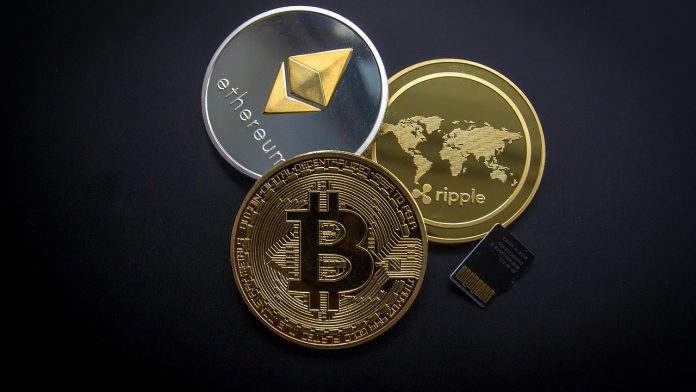
A decade and a half ago there was exactly one blockchain-based cryptocurrency: bitcoin. Today there are thousands, and new ones appear constantly. Many early coins were near-copies of bitcoin with small tweaks. Others take genuinely different approaches to what a blockchain is for. Understanding a handful of the main designs makes it much easier to make sense of the rest.
Bitcoin: digital scarcity first
Bitcoin was launched in 2009 by the pseudonymous Satoshi Nakamoto to allow payments without banks or other intermediaries. Its defining features are:
- Proof of work. Miners secure the network by expending computing power.
- Fixed supply. There will never be more than 21 million bitcoin. New coins enter circulation through mining, and the reward halves roughly every four years; since April 2024 it has been 3.125 BTC per block (The Block).
- Conservative design. Bitcoin changes slowly and deliberately, prioritising security and predictability over new features.
Because on-chain block space is limited, fees rise when the network is busy. For fast, small payments, the Lightning Network moves transactions into off-chain payment channels and settles them on bitcoin later, with payments that its developers say take milliseconds to seconds (Lightning Network). Many people now think of bitcoin less as a coffee-buying currency and more as a scarce digital store of value, though that is a debated view.
Ethereum: a programmable platform
Ethereum, launched in 2015, is designed as a general-purpose computer shared by everyone on the network. Developers write smart contracts, programs that run exactly as coded, to build applications for lending, trading, digital collectibles, stablecoins and more. Its currency, ether (ETH), pays for the computation and is used as collateral across these applications.
Key differences from bitcoin:
- Proof of stake. Ethereum dropped mining in September 2022. Validators now lock up ETH to secure the network, which cut its energy use by an estimated 99.95% (ethereum.org).
- No fixed supply cap. New ETH is issued to validators, while part of every transaction fee is burned, so total supply can rise or fall depending on network activity (ethereum.org).
- Faster evolution. Ethereum upgrades regularly. Recent upgrades such as Dencun (2024) and Fusaka (2025) focused on cutting costs for “layer 2” networks, which bundle many transactions together before settling them on Ethereum (ethereum.org).
Monero: privacy by default
A common misunderstanding, then and now, is that bitcoin is anonymous. It is pseudonymous at best. Every transaction is public and permanent, so anyone can trace payments between addresses. If an address is ever tied to your identity, for example through an exchange account, your history can often be linked to you.
Monero (XMR) takes a different approach. It uses stealth addresses, ring signatures and a technique called RingCT to hide the sender, receiver and amount of every transaction (getmonero.org). Because privacy is built in for everyone rather than being optional, Monero coins are designed to be interchangeable, with no “tainted” history.
That strength has brought regulatory pressure. Binance delisted Monero in February 2024, and Kraken stopped offering it to customers in the European Economic Area in late 2024, citing regulatory changes (Decrypt). Under the EU’s new anti-money-laundering rules, regulated crypto firms will be barred from handling privacy coins and anonymous accounts from 2027 (Cointelegraph). Even strong on-chain privacy can also be undermined off-chain, for example by how you buy the coins or by network-level tracking.
Stablecoins: crypto without the price swings
Stablecoins are tokens designed to hold a steady value, usually one US dollar, backed by reserves held by an issuer. They run on blockchains such as Ethereum and are widely used for trading and transfers. In the US, the GENIUS Act of July 2025 requires payment stablecoin issuers to hold one-to-one liquid reserves and publish monthly reserve disclosures; it takes effect no later than January 18, 2027 (The Block). The key risk is the issuer: a stablecoin is only as reliable as its reserves and its ability to honour redemptions.
Other altcoins
“Altcoin” simply means any cryptocurrency other than bitcoin. They tend to fall into a few families:
- Bitcoin variants such as Litecoin or Bitcoin Cash, which tweak block times, block sizes or other parameters.
- Smart-contract platforms competing with Ethereum on speed, cost or design.
- Application and governance tokens that give holders a role in a specific project.
- Meme coins, whose value rests almost entirely on community enthusiasm.
How to compare any coin
When you meet a new cryptocurrency, ask:
- What problem does it solve, and does it need its own blockchain to solve it?
- How is it secured? Proof of work, proof of stake, or a small group of approved validators?
- What is the supply policy? Fixed, inflationary, or decided by a company?
- Who controls it? Can a foundation, company or founder change the rules or freeze funds?
- How private is it, and how is it treated by regulators where you live?
- How liquid is it? Can you actually buy and sell it at a fair price on reputable platforms?
The answers will tell you far more than its current price or the size of its marketing budget.
This article is for general information only and is not investment advice. Cryptocurrencies are volatile; do your own research before investing.
Sources
- Bitcoin ushers in fourth halving as miners’ block subsidy reward drops to 3.125 BTC — The Block, 2024-04-19
- Lightning Network — Lightning Network, accessed 2026-11-21
- The Merge — ethereum.org, 2026-10-29
- What is ether (ETH)? — ethereum.org, 2026-10-23
- Ethereum roadmap — ethereum.org, accessed 2026-11-21
- What is Monero? — The Monero Project, accessed 2026-11-21
- Monero Dips 7% as Kraken Says It’s Delisting XMR for European Customers — Decrypt, 2024-10-02
- EU to ban anonymous crypto accounts and privacy coins by 2027 — Cointelegraph, 2025-05-02
- US regulators miss GENIUS Act’s one-year deadline for final stablecoin rules — The Block, 2026-07-18
