

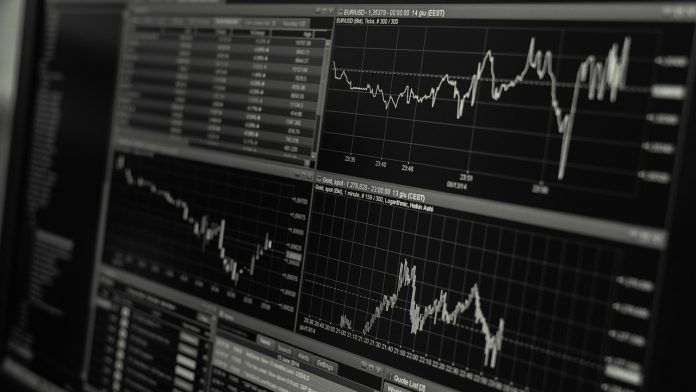
In 2017 and early 2018, crypto drew a wave of new investors chasing headline gains, and many of them learned about volatility the hard way. The market has changed a lot since then: there are regulated funds, more institutional participants and clearer tax reporting. What has not changed is that crypto prices can rise or fall by large percentages in a short time.
This article is not about which coin to buy or when. It is about how to approach a volatile market so that your decisions are deliberate rather than driven by fear or excitement.
Why crypto is so volatile
A few structural features drive the big swings:
- No cash flows to anchor value. Bitcoin pays no dividends or interest, so its price rests largely on supply, demand and sentiment.
- Fixed or programmed supply. When demand rises, supply cannot expand to meet it, so price does the adjusting.
- Leverage. Many traders borrow to amplify positions. When prices move against them, forced selling can turn a dip into a crash.
- Thin markets for smaller tokens. Less-traded coins can move dramatically on relatively small orders and are easier to manipulate.
- News sensitivity. Regulatory decisions, exchange failures and hacks can move the whole market quickly.
Choose how you want exposure
Investors now have more options than in 2018.
- Holding coins directly through an exchange or your own wallet gives you full control, along with responsibility for security.
- Spot exchange-traded products. US investors have been able to buy funds holding bitcoin since January 2024 (SEC) and ether since July 2024 (Baker McKenzie). In September 2025 the SEC approved generic listing standards that let exchanges list qualifying crypto products without a separate rule change for each (SEC).
- Crypto-related stocks give indirect exposure but add company-specific risk.
An ETF does not reduce price volatility; it changes custody, convenience and costs. The SEC stressed when approving bitcoin products that investors should remain cautious about bitcoin’s many risks.
Principles for a volatile market
1. Size your position for the worst case. Ask how you would feel, and what would happen to your finances, if the value of your holding fell by more than half. If the answer is “I’d be in trouble,” the position is too large. Only invest money you can afford to lose.
2. Have a plan before you buy. Write down why you are investing, how long you intend to hold, and what would make you sell. A plan made when calm is a guard against decisions made in a panic or a frenzy.
3. Consider building positions gradually. Buying a fixed amount at regular intervals, often called dollar-cost averaging, spreads your entry over time. It does not guarantee a profit, but it reduces the risk of putting everything in at a short-term peak.
4. Resist the “new coin” fear of missing out. A token that has jumped several-fold in days is not proof of a good investment. Sudden spikes in thinly traded coins can reflect promotion or manipulation. Missing a rally is a far smaller problem than buying at its top.
5. Avoid leverage unless you truly understand it. Borrowing to trade magnifies losses as well as gains, and in fast markets positions can be liquidated before you have time to react.
6. Don’t overtrade. Frequent trading racks up fees and spreads, and can create a tax event every time you sell at a gain. Selling every time a holding rises a little can also mean missing the longer-term outcome you originally planned for.
7. Diversify. Crypto assets tend to move together in sharp sell-offs, so owning several coins is not much diversification. Consider how crypto fits within your overall mix of cash, bonds, shares and other assets.
8. Rebalance periodically. If a big rally makes crypto a much larger share of your portfolio than you intended, trimming it back to your target is one disciplined way to manage risk.
Protect what you own
Volatility is not the only risk. An exchange failure, hack or scam can wipe out a holding entirely, which no amount of good timing can fix. Use reputable, regulated platforms, enable strong two-factor authentication, keep long-term holdings in a wallet you control, and never share your recovery phrase. Be wary of anyone promising guaranteed returns; the FTC notes that only scammers do that (FTC).
Keep records for tax
In many countries, selling, swapping or spending crypto can trigger a taxable gain or loss. In the US, brokers began issuing Form 1099-DA for digital asset sales for the 2025 tax year (IRS). Keep your own records of purchase prices and dates as well, especially for transfers between platforms and wallets.
The bottom line
You cannot control crypto’s volatility, but you can control your exposure to it. Decide in advance how much risk you are willing to take, choose how you want to hold it, avoid leverage and hype, and secure your assets. A sound process will not guarantee profits, but it greatly reduces the chance of a mistake you cannot recover from.
This article is for general information only and is not investment advice. Cryptocurrencies are volatile; do your own research before investing.
Sources
- Statement on the Approval of Spot Bitcoin Exchange-Traded Products — U.S. SEC, 2024-01-10
- Ethereum ETFs to Start Trading Today in the United States — Baker McKenzie, 2024-07-23
- SEC Approves Generic Listing Standards for Commodity-Based Trust Shares — U.S. SEC, 2025-09-17
- What To Know About Cryptocurrency and Scams — Federal Trade Commission, last updated May 2022
- Understanding your Form 1099-DA — IRS, 2026-11-19
